How Restaurants in Japan Can Reach Chinese Travelers

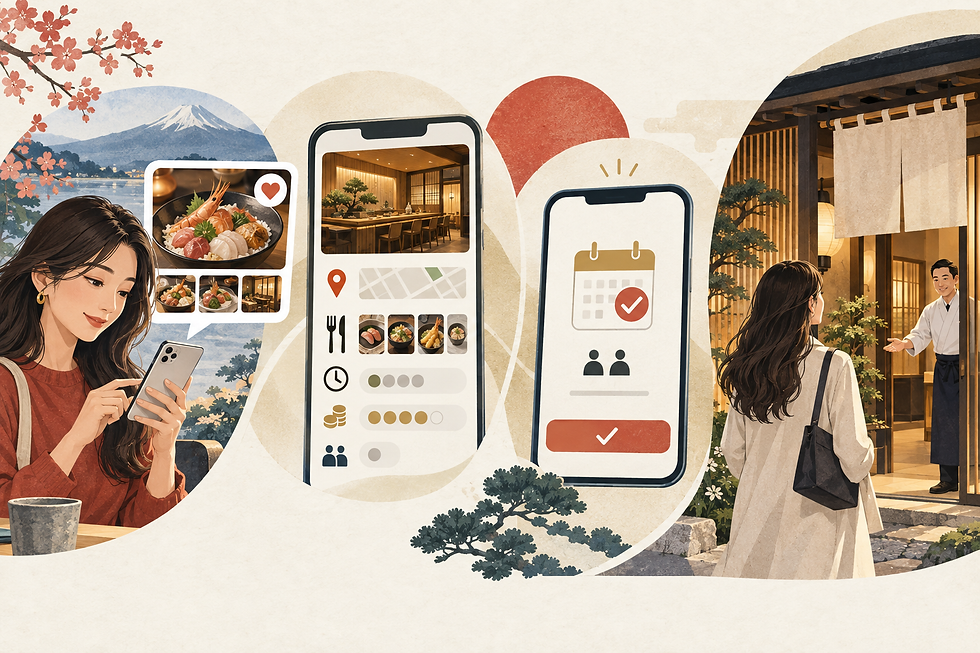
A traveler planning an evening in Tokyo does not simply need a list of good restaurants. They need somewhere that fits the neighborhood, the budget, the schedule, and the people at the table. A beautiful food photograph can start that search. Useful information helps finish it.
For a restaurant in Japan, a practical Chinese content strategy should connect the experience you offer with the decisions a visitor needs to make before booking.
Explain the meal before selling the atmosphere
Imagine a couple choosing between a tasting menu and an informal dinner after sightseeing. They may want to know how long the meal takes, whether everyone must order the same menu, and whether the advertised price includes additional charges.
Build content around those questions. Show a representative meal, explain portions, identify the booking requirements, and date any price information. If menus change with the season, make that clear. Dietary requests should be checked with the restaurant rather than inferred from photographs.
A useful Chinese post might explain “what to expect from a two-hour dinner near our restaurant’s nearest station.” It gives the reader a reason to save the post and a clearer sense of whether the experience suits them.
Make the restaurant easy to identify
Keep your Japanese name, Romanized name, address, and any Chinese naming consistent across your content. Include the correct entrance, floor, and nearby landmark when they are useful. A visitor should be able to match the restaurant they discovered online with the place they see on the street.
Use Chinese search phrases naturally around cuisine, neighborhood, and occasion. A family dinner and an anniversary meal call for different information, even when they happen in the same restaurant.
Give every post a practical next step
Tell readers where to check availability, which languages the booking channel supports, and when a reservation becomes confirmed. Explain deposits and cancellation terms before guests commit.
You can then evaluate content through the questions and reservations it generates. Saves indicate interest; confirmed bookings and actual visits answer a different business question. Keep those measures separate.
Where BridgeReach fits
BridgeReach helps overseas restaurants communicate with Chinese travelers. For a Japan-focused campaign, the starting point should be an audit of what a visitor can find, understand, and do next. The resulting content brief can turn your real menu, location, and service details into useful Chinese discovery content.
Want Chinese travelers to understand your restaurant before they arrive? Contact BridgeReach for a China visibility audit.


Comments